


How to Clean an Essential Oil Diffuser: A Simple Guide for Better Performance
- Faradaa Shop
- 6 days ago
- 3 min read

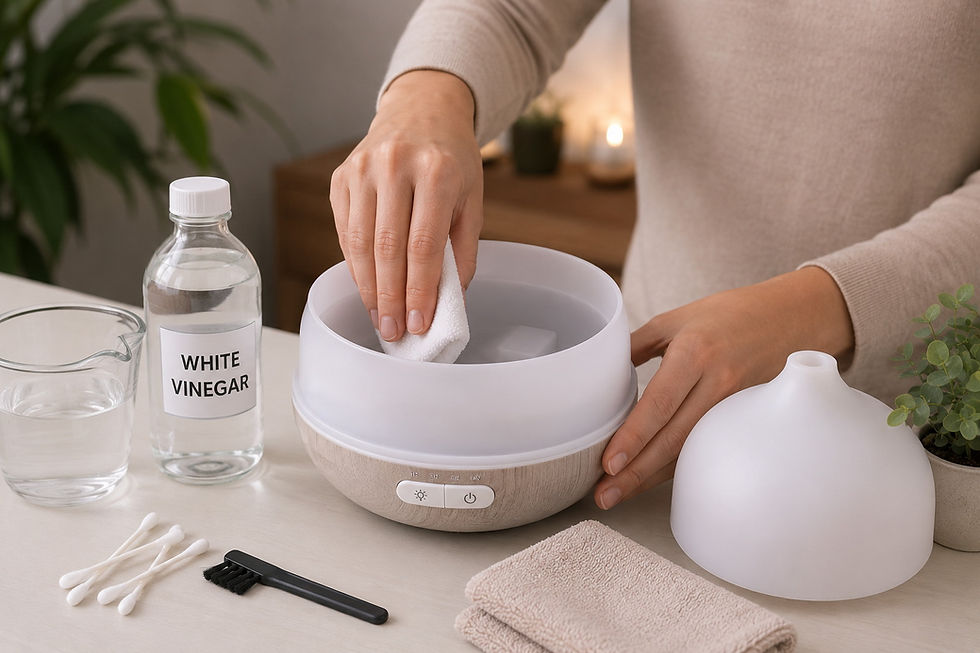
An essential oil diffuser can help create a relaxing and inviting atmosphere, but regular cleaning is essential to keep it working properly. Over time, essential oils can leave behind residue that affects mist output, alters fragrance quality, and shortens the lifespan of your diffuser.
Fortunately, cleaning a diffuser is quick and easy. With proper maintenance, you can enjoy a fresher aromatherapy experience and help your diffuser perform at its best.
Why Cleaning Your Diffuser Matters
Every time a diffuser is used, small amounts of essential oil remain inside the water tank, internal components, and mist outlet.
Without regular cleaning, this buildup may:
Reduce mist production
Cause unpleasant odors
Affect fragrance quality
Create residue inside the tank
Shorten diffuser lifespan
A clean diffuser helps ensure a more consistent and enjoyable aromatherapy experience.
How Often Should You Clean Your Diffuser?
The cleaning frequency depends on how often you use it.
General recommendations include:
Quick rinse after every few uses
Weekly cleaning for regular users
Deep cleaning once or twice per month
If you frequently switch between different essential oils, more frequent cleaning may help prevent scent mixing.
What You'll Need
Before you begin, gather the following items:
Clean water
White vinegar
Soft microfiber cloth
Cotton swabs
Small cleaning brush (optional)
Avoid harsh chemicals or abrasive cleaning tools that could damage diffuser components.
Step 1: Turn Off and Unplug the Diffuser
Always disconnect the diffuser from its power source before cleaning.
Allow the unit to cool completely if it has been operating recently.
Step 2: Empty Any Remaining Water
Pour out any remaining water and essential oil mixture from the tank.
Be careful not to spill liquid into air vents or electrical components.
Step 3: Wipe the Water Tank
Using a soft cloth, gently wipe the inside of the reservoir to remove excess moisture and visible residue.
Pay special attention to areas where oils tend to accumulate.
Step 4: Use Vinegar for Deeper Cleaning
Fill the tank halfway with clean water and add a small amount of white vinegar.
Run the diffuser for approximately five to ten minutes.
This helps loosen oil residue that may be difficult to remove manually.
Afterward, empty the tank completely.
Step 5: Clean Tight Areas
Use a cotton swab to clean corners, edges, and hard-to-reach areas.
Avoid excessive pressure around delicate components.
Step 6: Rinse Thoroughly
Rinse the reservoir with clean water to remove any remaining vinegar.
Wipe dry with a clean microfiber cloth.
Step 7: Allow the Diffuser to Air Dry
Leave the diffuser open for a short period to ensure all moisture evaporates before the next use.
This helps reduce the possibility of unwanted odors or residue buildup.
Common Cleaning Mistakes to Avoid
Using Harsh Chemicals
Strong cleaning products may damage internal components and leave unwanted residue behind.
Forgetting the Ultrasonic Plate
Many ultrasonic diffusers contain a small vibrating plate that requires occasional cleaning.
If you're unsure how ultrasonic diffusers work, read our guide on Ultrasonic vs Nebulizing Diffusers.
Allowing Oil Residue to Build Up
Waiting too long between cleanings can affect diffuser performance and fragrance quality.
Ignoring Manufacturer Instructions
Always review the cleaning recommendations provided by the manufacturer.
Tips for Better Diffuser Performance
Regular maintenance can help improve diffuser efficiency and longevity.
Helpful practices include:
Emptying water after use
Cleaning regularly
Using quality essential oils
Avoiding overfilling the tank
Storing the diffuser in a clean, dry location
These simple habits can help keep your diffuser operating smoothly for years.
Choosing the Right Diffuser for Your Space
Some diffusers are easier to clean than others.
If you're still deciding which type of diffuser best suits your needs, explore our comparison of Ultrasonic vs Nebulizing Diffusers.
For larger living areas, you may also find our guide to Best Essential Oil Diffusers for Large Rooms helpful.
If you're looking for a quieter option for relaxation and sleep, read our article on Best Essential Oil Diffusers for Bedrooms.
Final Thoughts
Cleaning your essential oil diffuser is one of the simplest ways to improve performance and extend its lifespan. A clean diffuser delivers a fresher aroma, more consistent mist output, and a better overall aromatherapy experience.
If you're building a complete wellness routine around aromatherapy, explore our guide on How to Create a Luxury Home Spa Experience for ideas on creating a relaxing and spa-inspired environment at home.
Combined with the right diffuser and a calming atmosphere, regular maintenance can help you enjoy all the benefits of a comfortable home spa experience.


Comments